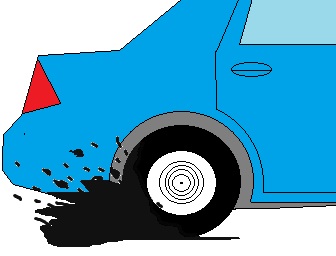
I was driving on the freeway one
day and listening to a talk radio program that had a discussion about
the recent oil disaster in the Gulf of Mexico. Many of the
callers on the program expressed anger against the government or
society’s abuse of the environment, but among the complaints, most
centered on the British Petroleum Corporation’s failure to ensure the
safety of their offshore oil rig. All three concerns, while not
mutually exclusive but interconnected must have the same root
cause. “What could it be?” I thought to myself.
The answer chimed in my mind like a bell
summoning monks to prayer as a person talking on his cell phone sped
past me on the freeway. The driver in the car was holding the
phone to his ear and exceeding the limit by at least 10 mph (as I was
driving with the cruise control set at 71 mph) on a 70 mph
expressway. What made my revelation more telling were the drivers
of vehicles that zoomed past me and overtook the speedy cell phone
driver. I believe the root cause of the disaster in the
Gulf is the same thing that leads many people to drive on the freeway
as if they were in the Daytona 500: presumptuous carelessness.
The speeding driver neglects the limits set by the law and the negative
consequences they risk because, in essence, they believe that their
driving is so good, so overwhelmingly skilled, that the laws are really
for those “other inferior” drivers – that is, until a highway patrol
car is in sight.
This is the same habitual thought pattern of a
large corporation that does not listen to the warnings of inspectors
and its own employees, but only takes the precautionary measures that
are enforced by law. Like a speeding driver, the thought of
something going wrong as a direct result of carelessness is dismissed
with the non-sensical affirmation “It won’t happen to me”.
The Psalmist implores the Lord, “Keep back thy
servant also from presumptuous sins; let them not have dominion over
me! Then I shall be blameless, and innocent of great
transgression.” Indeed, sin is defined by the effect actual it
incurs, but by the potential to hurt others, the environment or one’s
self. It is easy to be disturbed about the failure of the
officials at BP to heed the many warnings about the inadequacy of their
safety measures, but those instances are miniscule compared to the
number of speed limit signs one passes on an average commute.
In hindsight, the anger, regret and lessons
learned from the Gulf oil spill can serve as a reminder of what the
careless “It won’t happen” mentality can lead to. But these will
really have no positive effect in our lives if we don’t root out the
same mentality in ourselves, especially when doing something that
involves the safety of others and the environment such as operating a
vehicle.