
Humility and the Chair of St. Peter
by Fr. John
Martin Shimkus, O.S.B.
Jesus said to them, “But who do you say that I
am?” Simon Peter said in reply, “You are the
Christ, the Son of the living God.” Jesus said to him in
reply, “Blessed are you, Simon son of Jonah. For flesh
and blood has not revealed this to you, but my heavenly
Father. And so I say to you, you are Peter, and
upon this rock I will build my Church, and the gates of
the netherworld shall not prevail
against it. I will give you the keys to the Kingdom of
heaven. Whatever you bind on earth shall be bound
in heaven; and whatever you loose on earth shall be
loosed in heaven.” (Mt 16:15 -19)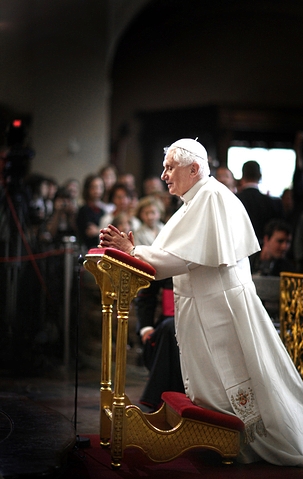
Although we as Catholics are
very familiar with this passage from Scripture, do we
really think about all it is saying? It’s hard
to imagine that a greater
grant of power could be given to anyone than was given
to Peter and to his successors, the
popes: the “keys of the Kingdom of Heaven”, the power
to bind and to loose - both on earth and in heaven”! It’s a
share of divine power that can hardly be understood or
fathomed.
And if want know what St. Peter did with that power,
how he chose to exercise it, we need to delve into another part of
Scripture, the first letter of Peter. To his
fellow elders, Peter writes, “Tend the flock of God in
your midst, overseeing not by constraint but
willingly, as God would have it, not for shameful
profit but eagerly. Do not lord it over those
assigned to you, but be examples to the flock.” (1 Pt
5:2-3). In other words, St. Peter took the great
power Jesus had given him and he used it to serve
God’s people in humility.
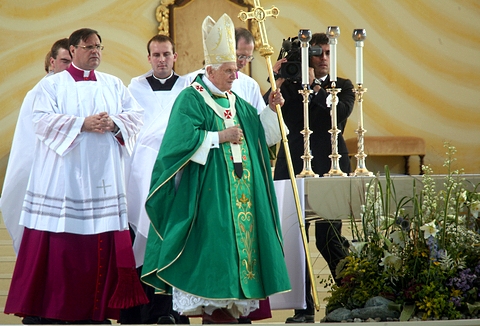
In regard to humble service,
the present occupant of Peter’s chair comes to
mind. Pope Benedict XVI, having served as pope
for just shy of eight years, has decided to relinquish
that power at the end of this month. Pope
Benedict took an honest look at himself, his age, his
declining health. Then he took stock of the
Church’s need in this modern age, to have a pope who
is visible, mobile and able to truly pastor a
worldwide congregation and came to the honest
admission that he is no longer that man. His
decision to make way for a new shepherd was his last
exercise of the great power he has from Christ.
And it offers us an example of how true service is
rooted in the humility – an honest assessment before
God of who we are and how we can best serve God’s
people.
.